
Plywood & Wooden products
Plywood Sourcing from Southeast Asia
Southeast Asia is one of the world’s most important regions for plywood sourcing due to its established wood-processing industries, favorable climate for fast-growing trees, and improving export infrastructure.
Types of plywood to source from Asia

Commercial plywood
Commercial plywood is widely used for interior construction, packaging, shelving, furniture manufacturing, and general-purpose joinery where a balance of strength, appearance, and cost is required. In Southeast Asia, commercial plywood is mainly produced from plantation-grown wood species such as acacia, eucalyptus, and rubberwood, which provide stable quality and consistent supply. These woods are chosen for their good bonding properties, workable surface, and suitability for both face veneers and core layers.
Furniture plywood
Furniture plywood is primarily used for making cabinets, wardrobes, tables, chairs, drawer systems, and other interior furniture components.
In Southeast Asia, it is produced from a mix of wood species including Acacia, Eucalyptus, Styrex, Keruing, and other mixed woods, chosen for their strength, durability, and aesthetic appeal. These wood species provide stable cores and smooth veneers, making the plywood suitable for both visible surfaces and structural applications. Southeast Asian furniture plywood is widely exported and also used domestically for high-quality, certified, and cost-effective furniture production.
Packing plywood
Packing plywood is specially designed for crates, boxes, pallets, and protective packaging for industrial and commercial goods. It is valued for its strength, durability, and resistance to impact and moisture during transportation. In Southeast Asia, packing plywood is often produced from fast-growing and plantation woods such as Acacia, Eucalyptus, Rubberwood, and mixed hardwoods. This type of plywood is typically more cost-effective than furniture-grade plywood while still meeting standards for strength and safety.
Packing plywood is widely used for export shipments, machinery packaging, and heavy-duty cargo protection in both domestic and international markets.
Film-faced plywood
Film-faced plywood is a type of plywood coated with a thin film overlay, providing a smooth, durable, and water-resistant surface. It is commonly used in construction for concrete formwork, scaffolding, flooring, and other applications requiring a reusable, high-strength panel. In Southeast Asia, film-faced plywood is typically made from plantation-grown species such as Acacia, Eucalyptus, and mixed hardwoods. The film coating protects the plywood from moisture, wear, and chemical exposure, allowing multiple uses in demanding construction environments. Its strength, durability, and uniform surface make film-faced plywood a preferred choice for builders, contractors, and industrial projects across the world.
Matply
Matply is a type of plywood with a smooth, matte-finished surface, often used for interior furniture, cabinetry, and decorative panels. It provides a uniform appearance that is easy to paint, laminate, or veneer, making it suitable for high-quality interior applications. In Southeast Asia, matply is commonly produced from plantation-grown woods such as Acacia, Eucalyptus, Rubberwood, and mixed hardwoods. The plywood combines strength and stability with a fine surface texture, ensuring both durability and an attractive finish. Matply is widely used in furniture production, interior joinery, wall panels, and drawer systems for both domestic and export markets.
LVL plywood
LVL plywood (Laminated Veneer Lumber plywood) is an engineered wood product made by bonding thin layers of veneers under heat and pressure for high strength and uniformity. It is commonly used in construction for beams, lintels, flooring, roofing, and structural furniture components that require dimensional stability. In Southeast Asia, LVL plywood is often produced from fast-growing plantation species such as Acacia, Eucalyptus, and mixed hardwoods. The layered construction provides excellent load-bearing capacity while minimizing warping, splitting, or shrinkage compared to solid timber.
LVL plywood is widely used in both residential and commercial projects, offering a reliable, high-performance alternative to conventional timber.
Exterior plywood
Exterior plywood is specially designed for outdoor and moisture-prone applications, offering durability and resistance to weather, water, and decay.
It is commonly used for roofing, cladding, exterior furniture, outdoor decking, and construction projects exposed to the elements. In Southeast Asia, exterior plywood is typically made from durable plantation and hardwood species such as Acacia, Eucalyptus, Keruing, and mixed woods. The plywood is bonded with waterproof adhesives and sometimes treated to enhance resistance to fungi, insects, and moisture. Its strength, stability, and weather resistance make exterior plywood a reliable choice for both local use and export markets requiring long-lasting outdoor performance.
Our plywood sourcing services in Asia
Our plywood sourcing services cover the complete procurement process, from finding suitable manufacturers to arranging the final shipment. We conduct manufacturer searches and supplier verification to identify reliable plywood factories that match your product specifications, quality requirements, and target price. We prepare and manage RFQs and quotation comparisons, helping buyers evaluate suppliers on price, specifications, production capabilities, MOQ, and lead times.
We can arrange plywood samples for evaluation before production and conduct factory audits to assess manufacturing capabilities and quality systems. During production, our team can provide production monitoring and quality inspection, including checks of plywood thickness, dimensions, moisture content, veneer and core quality, adhesive and bonding performance, surface condition, and other agreed specifications. Before shipment, we can also inspect packaging, labeling, quantities, and container loading to help ensure the order is prepared correctly.
For international buyers, our support can extend to export documentation and freight forwarding, helping coordinate the logistics from the factory to the destination. We also support OEM and custom plywood requirements, including specific dimensions, thicknesses, wood species, surface finishes, panel construction, machining, and other buyer-defined specifications. This provides a single sourcing process for buyers looking to purchase plywood from China and Southeast Asia.
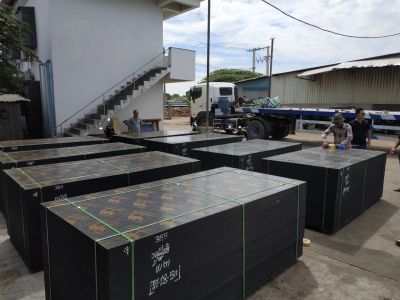
How to source plywood from Southeast Asia
- Define plywood specifications
- Identify suitable manufacturers
- Check factory capabilities
- Request quotations
- Compare prices and specifications
- Request samples
- Inspect the factory
- Conduct quality testing
- Place a trial order
- Inspect production
- Approve final shipment
- Arrange export and shipping